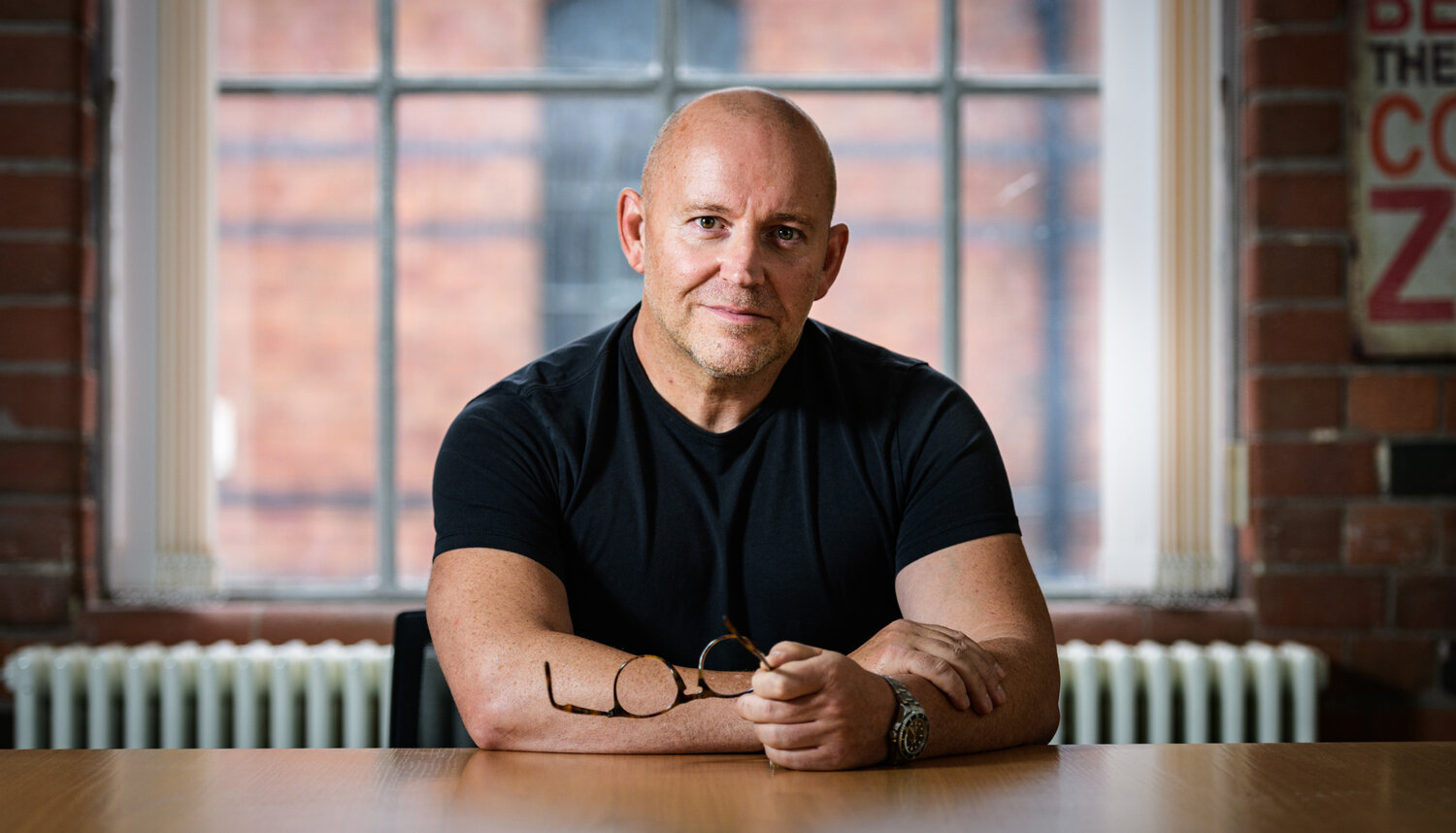
There is a particular credibility that belongs to the person who has been where you are. Who has experienced, from the inside, what it is to live in the grip of severe anxiety disorder — and who has found a genuine way out.
Charles Linden has that credibility. And for over thirty years, he has dedicated his life to making the path he found available to everyone who needs it.
Charles Linden is degree level qualified — though not in psychology. He is, however, a true psychologist in every sense that matters: a born researcher who has spent well over 50 years experiencing and researching anxiety disorders. Longer, and with far greater personal investment, than most clinicians accumulate across an entire career.
The beginning: severe anxiety at its worst
Charles's anxiety disorder began in his early teens. By his late teens, it had developed into a condition of considerable severity: up to twenty panic attacks per day, agoraphobia that progressively narrowed his world, OCD rituals that consumed hours of his day, and the constant, exhausting presence of a threat response that never switched off.
He tried the available treatments. Medication helped briefly and then stopped. Therapy gave him language for his experience but did not change it. CBT provided temporary relief and then relapsed. He became, in the clinical terminology, a "treatment-resistant" case — not because he was beyond help, but because the treatments he was offered were not designed to provide the kind of help he needed.
"I reached a point," Charles has said, "where I stopped trying to manage the anxiety and started asking a completely different question. Not 'how do I cope with this?' but 'why is this happening, and what would have to change for it to stop?'"
The discovery
That question led Charles to an intensive period of self-study — reading the available science on anxiety, on the nervous system, on the mechanisms of the threat response. And in that material, he found something that the clinical frameworks of the time had not adequately addressed: a clear account of what was happening physiologically, and — critically — an understanding of what would need to change for the condition to resolve.
He applied what he had discovered. His anxiety disorder resolved permanently. Within weeks.
That was in 1996. He has not experienced anxiety disorder since.
The Linden Method
Charles's first instinct was to share what he had discovered. He began writing down the specific behaviours and conditions that had enabled his recovery — not as therapy, not as coping strategies, but as a structured protocol for producing the neurological conditions necessary for the anxiety response to normalise.
The Linden Method was first published in 1997. It was met, initially, with scepticism from the clinical community — which is predictable, and understandable. The claims were significant: not symptom management, but complete resolution. Not improvement, but recovery. Not for some people, but for everyone, if the protocol was followed.
The outcomes, accumulated across two decades and hundreds of thousands of clients, vindicated the claims. The method is now recommended by NHS practitioners, consultant physicians, and specialist nurses. It is NICE Compliant and aligned with the NHS Stepped Care Model. It has been covered by national media on multiple occasions, endorsed by celebrities including Jodie Kidd and Lady Jemma Mornington, and referenced in academic contexts examining evidence-based recovery from anxiety disorder.
LAR Coaching today
LAR Coaching is the delivery vehicle for the Linden Method in its most refined form. The programme combines Charles's foundational protocol with one-to-one coaching from coaches who have personally recovered from anxiety disorder using the method — people who understand, from direct experience, what clients are going through.
Charles remains actively involved: hosting weekly Q&A webinars accessible to all enrolled clients, continuing to develop and refine the programme, and contributing directly to the evidence base that supports the method's clinical standing.
Why this matters
The treatment landscape for anxiety disorder is not working. Relapse rates are high, waiting lists are long, and the dominant approaches address symptoms rather than causes. The result is a generation of people who have been told — explicitly or implicitly — that they must manage their anxiety for life.
Charles Linden's answer to that message is the same as it has been for thirty years: no. You don't. Recovery is possible. Complete, permanent recovery from anxiety disorder is not an extraordinary outcome. It is the standard outcome when the right approach is applied.
That approach exists. It is available now. And it begins with a single conversation.