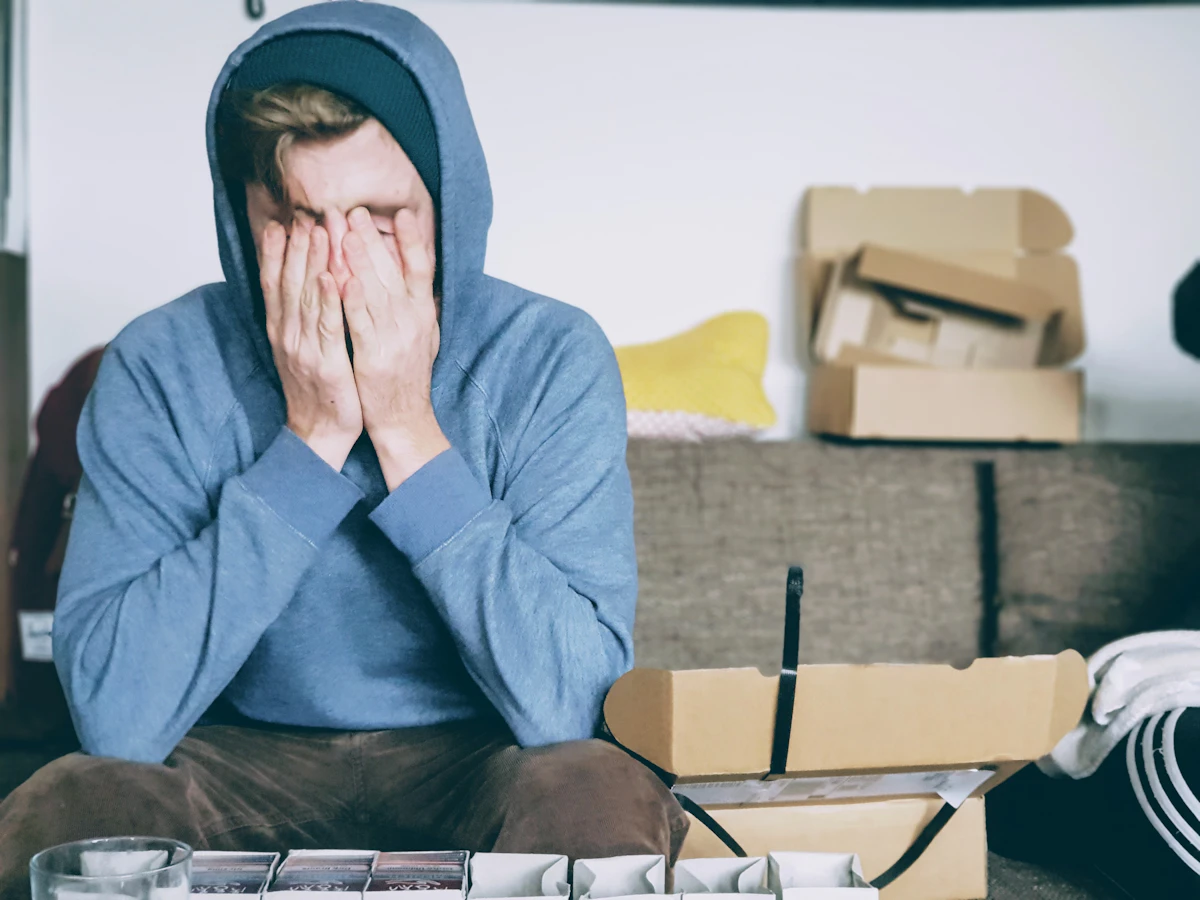
Agoraphobia is frequently misunderstood. It is not simply a fear of open spaces. It is a complex anxiety response that causes a person to avoid any situation in which escape might be difficult or help unavailable during a panic attack.
At its most severe, it can reduce a person's world to a single room — or even a single chair. People with severe agoraphobia may not have left their home for months or years. They may rely entirely on others for basic needs. Their lives, and the lives of those who love them, are profoundly curtailed.
And yet agoraphobia is completely recoverable. Every single person — regardless of severity or duration — can achieve full freedom.
Amanda's story
Amanda L., 42, from Sydney, had not left her house in three years when she contacted LAR Coaching. Her agoraphobia had developed following a series of panic attacks on public transport in her late thirties, and had gradually tightened its grip until she could not step into her own garden.
She had tried CBT — both group and individual sessions — and had been on medication for two years. Neither had enabled her to leave the house.
Within six months of working with her LAR coach, Rebecca, Amanda boarded a flight to Portugal for her sister's wedding. "I cannot put into words what that day meant," she said. "I had genuinely believed I would never leave the house again."
Michael's story
Michael R., 58, from London, had lived with agoraphobia for 20 years before finding LAR Coaching. He had managed a limited life — short, predictable journeys close to home, always with a trusted companion — but had resigned himself to the belief that this was the best his life could be.
"Charles Linden's method gave me my life back," Michael says. "I can go shopping alone. I can travel on the tube. Last month I went to a football match — something I hadn't done in two decades."
Why agoraphobia responds so completely to the LAR approach
Agoraphobia is driven by the same hyper-vigilance that underlies all anxiety disorders. The specific trigger — being away from safety — is a learned association, but the mechanism is identical.
When the anxiety response normalises through the LAR programme, the association between "being out" and "danger" dissolves. Not through gradual exposure (which forces a person to endure fear without addressing its cause) but through genuine neurological change.
This is why LAR clients do not simply "manage" their agoraphobia — they are free of it.
Recovery at any severity
It is important to state this clearly: there is no level of agoraphobia too severe to recover from. The mechanism of recovery is the same whether a person can travel within a ten-mile radius or cannot step outside their front door.
If you are currently housebound, or if your world has shrunk to something unrecognisable, please know that your situation is not different. Your recovery is as available to you as it was to Amanda, and to Michael, and to the hundreds of thousands of others who have regained their freedom.
The first step is a conversation. Our coaches will meet you exactly where you are.